

Teachers play a crucial role in shaping how students learn and interact in the classroom. While every educator has a unique personality, most teaching approaches can be grouped into recognizable styles. Understanding these teaching styles helps students, parents, and school administrators appreciate how learning environments are created and managed.
Below are eight common types of teachers in the classroom, inspired by everyday classroom behavior.
- The Static Teacher
The static teacher usually stays in one place, often near the desk or the board. This teaching style focuses on structured delivery of lessons, lectures, and explanations.

Key characteristics:
Stays mostly at the front of the classroom
Uses the board or presentation tools frequently
Maintains clear authority and structure
Best for:
Subjects that require detailed explanations, such as mathematics or theory-based lessons.
- The Roaming Teacher
The roaming teacher moves freely around the classroom while teaching. This approach allows closer monitoring of students and encourages engagement.

Key characteristics:
Walks between desks
Offers help while students work
Creates a relaxed learning atmosphere
Best for:
Classrooms that focus on discussion, group work, and student participation.
- The Patrol Teacher
This teacher follows specific paths around the classroom, often walking up and down rows. The goal is to maintain discipline and ensure students stay focused.

Key characteristics:
Walks in set patterns
Observes student behavior closely
Prevents distractions
Best for:
Large classes where classroom management is essential.
- The Interactive Teacher
The interactive teacher actively engages with students at close range. They ask questions, listen carefully, and encourage student responses.
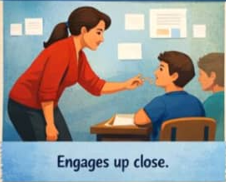
Key characteristics:
One-on-one interaction
Encourages questions and discussion
Builds strong teacher-student relationships
Best for:
Younger learners and classrooms that prioritize active participation.
- The Demonstrator
The demonstrator focuses on showing rather than just explaining. Lessons often include practical examples, experiments, or visual aids.

Key characteristics:
Uses teaching materials and demonstrations
Explains concepts step by step
Makes learning more visual
Best for:
Science, technical subjects, and practical skills training.
- The Facilitator
The facilitator guides students rather than leading the lesson directly. This teacher encourages independent learning and critical thinking.

Key characteristics:
Observes and supports from a distance
Encourages teamwork
Helps students find solutions themselves
Best for:
Advanced learners and project-based learning environments.
- The Circulator
The circulator continuously moves around the classroom to ensure everyone is involved. This style combines monitoring and support.
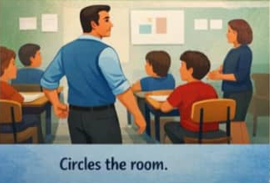
Key characteristics:
Moves in circles around the room
Checks student progress frequently
Keeps the class engaged
Best for:
Mixed-ability classrooms where students need different levels of support.
- The Commanding Teacher
The commanding teacher leads with authority and strong classroom control. Clear rules and expectations are emphasized.

Key characteristics:
Firm leadership style
Clear instructions and discipline
High classroom order
Best for:
Situations that require strong control, such as exam preparation or large groups.
Why Understanding Teaching Styles Matters
No single teaching style is perfect for every classroom. The most effective teachers often combine several approaches depending on:
Student needs
Subject matter
Class size
Learning objectives
Understanding these teaching styles helps improve communication between teachers and students and creates better learning outcomes.
Final Thoughts
Teaching is both an art and a skill. Each teacher brings a unique approach that influences how students learn and grow. By recognizing different classroom teaching styles, schools can support better education strategies and create more effective learning environments.

Am ready